Tennis has a language of its own. Have you ever watched a match or walked past the TV while a match is playing and heard the terms “deuce”, “break point”, or “love”? Have you ever wondered what in the world they are talking about? Well, you’re not alone.
One of the easiest ways to actually enjoy tennis is by understanding what’s happening in the game. This means understanding the terms, scoring system, and player strategies. Understanding these aspects of the game will help you know what’s going on and help you to make more informed betting decisions.
Here’s everything you need to know about tennis terms, explained simply.

Why It’s Important to Know Tennis Terms
Tennis has a unique scoring system and its own vocabulary that can seem very complicated at first. But once you understand the terminology, matches become easier to follow. Learning common tennis terms can help you understand match commentary, read player statistics, and better understand tennis betting markets.
So, it doesn’t matter if you’re watching one of the Grand Slams, the National Bank Open, or your local club championship; these are the common tennis terms used in every match.
Tennis Scoring Terms
Before trying to jump in and understand the more complex terms, it’s important to understand how tennis scoring works.
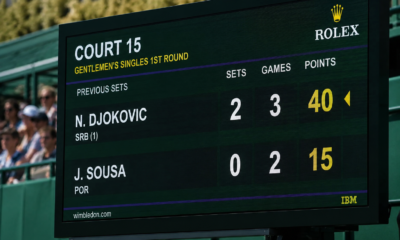
Tennis uses a unique scoring system that can be somewhat confusing to understand if you’re seeing it for the first time. Instead of using 0, 1, 2, 3, and 4, tennis has its own terminology. Each game follows the same scoring system:
- Love (0)
- 15 (1)
- 30 (2)
- 40 (3)
- Game
Deuce
Deuce means that both players have reached 40-40 (3-3). From here, neither player can win the game by a single point. Instead, one player must win two consecutive points to win the overall game. If this happens, Game is called.
Advantage
After deuce, the player who wins the next point has advantage. It’s here you’ll hear the commentators say, “advantage server” or “advantage receiver”. Whoever has the advantage and wins the next point wins the game. But if they lose the next point, the score returns to deuce.
Game
A game is one of the most basic scoring units used in tennis. Players compete to win points. The first player to win a game is one step closer to winning the set. A game is won when a player wins by at least four points or leads by two points.
For example, a game might progress from 15-0 to 30-0 to 40-0. Game is then called if the server wins the next point, as they would have been leading by four points. But if both players reach 40-40, the score becomes deuce, and deuce rules apply. In other words, the first player to gain advantage and win by two consecutive points wins the game.
Set
A set is a group of games. Most sets are won by the first player to reach six games while leading by at least two games. For example, 6-2, 6-4, 7-5. Note that the points difference here is four or two as needed in a Game. If the score sits at 6-6, then a tiebreak is played.
The number of sets played is dependent on the tournament. You get best-of-three sets used in ATP and WTA Tours and Olympic tennis or best-of-five sets used in men’s Grand Slam singles.
Match
A match is won by the player who wins the best-of-three or the best-of-five sets.
Tiebreak
A tiebreak is used when the score is sitting at 6-6. Here, instead of normal scoring, players count points numerically. The first player to reach seven points and lead by at least two wins the set.
Serving Terms
A serve is one of the most important shots a player can make in tennis. Here are the common tennis terms related to serving.
Ace
An ace is a serve that lands inside the correct service box. This serve isn’t touched by the receiving player. As such, an ace wins immediate points.
Serving an ace is known to put pressure on the server’s opponent.
Fault and Double Fault
A fault occurs when a serve lands outside the service box, hits the net and lands incorrectly, or misses the service box completely. Players are allowed a second serve after committing a fault.
A double fault happens when the player misses their first and second serves. The point is automatically awarded to the receiver.
Let
A ‘let’ occurs when the serve touches the top of the net but still lands inside the correct service box. The serve doesn’t count, and no penalty is given. The player simply serves again.

Important Match Terms
Break Point
A break point happens when the receiving player is one point away from winning the server’s game. This means that in tennis, the advantage of holding serve is huge, so break points are often crucial turning points in a match.
For example, if the score is 30-40 and the receiver wins the next point, the receiver breaks serve. In other words, the receiving player wins the game.
Hold Serve
To hold serve means that you are winning your own service game. Players with strong serves are expected to consistently hold serve throughout the match.
Rally
A rally is the exchange of shots after the serve. This goes on until one player wins the point. Some rallies are short, while others can continue for many shots.
Tennis Shot Terms
Forehand
A forehand is played on the player’s dominant side. It’s usually one of the most powerful and reliable shots in tennis.
Backhand
A backhand is played on the opposite side of the player’s forehand. Players can use either a one- or two-handed backhand.
Volley/Half Volley
A volley is a shot struck before the ball bounces. These are usually played close to the net and so need excellent reaction times.
A half volley, on the other hand, is played immediately after the ball bounces. This gives a player little time to react but can change the momentum of a rally.
Smash
A smash or overhead is a hit above the player’s head. This is usually played aggressively to finish the point.
Lob
A lob is a high shot that travels over an opponent standing near the net.
Drop Shot and Passing Shot
A drop shot is used to softly hit the ball just over the net. It’s used to make the player run forward from the baseline.
A passing shot is played past an opponent who has moved towards the net. This is the most effective way to counter an aggressive net play.
Slice vs Topspin
A slice is a shot struck with backspin. It travels lower over the net, making it more difficult to attack.
A topspin bounces differently, causing the ball to rotate forward. This helps it dip quickly into the court while bouncing higher after landing.
Bet on Tennis with bet.co.za
Learning the most common tennis terms is the best way to understand the sport. It allows you to watch and bet with more confidence. So, as you watch more matches, these terms will become second nature and part of your vocabulary.
Ready to put your knowledge to the test? Explore betting on tennis with bet.co.za.






Slot games
Slot Games of the Week to Try with Bet.co.za

Carling Currie Cup
Pumas vs Griquas: Preview and Predictions


F1 News & Updates
Belgian Grand Prix Review

F1 News & Updates
F1: Hungarian Grand Prix Preview And Predictions


F1 News & Updates
Austrian Grand Prix Review – Verstappen and Perez Shine in Spielberg

International And Local Golf News And Tournaments
Podcast: US Open Golf Betting Preview