At times, watching a tennis tournament can feel like trying to solve a puzzle. You see a long list of players, different rounds, and seeded names spread throughout the bracket. But how in the world do these things fit together, and what do they have to do with tennis?
Well, the answer is simple. The words you’re looking for that bring all these different concepts together are ‘tennis draw’. A tennis draw determines which players are playing each other, where they’re placed in the tournament bracket, and the potential route they must take to reach the final.
But again, how are tennis draws made? What do they have to do with seeding? And why do your favourite players only meet in the final? We’re here to answer all these questions and more. Here’s how tennis draws work and what they mean.

What is a Tennis Draw?
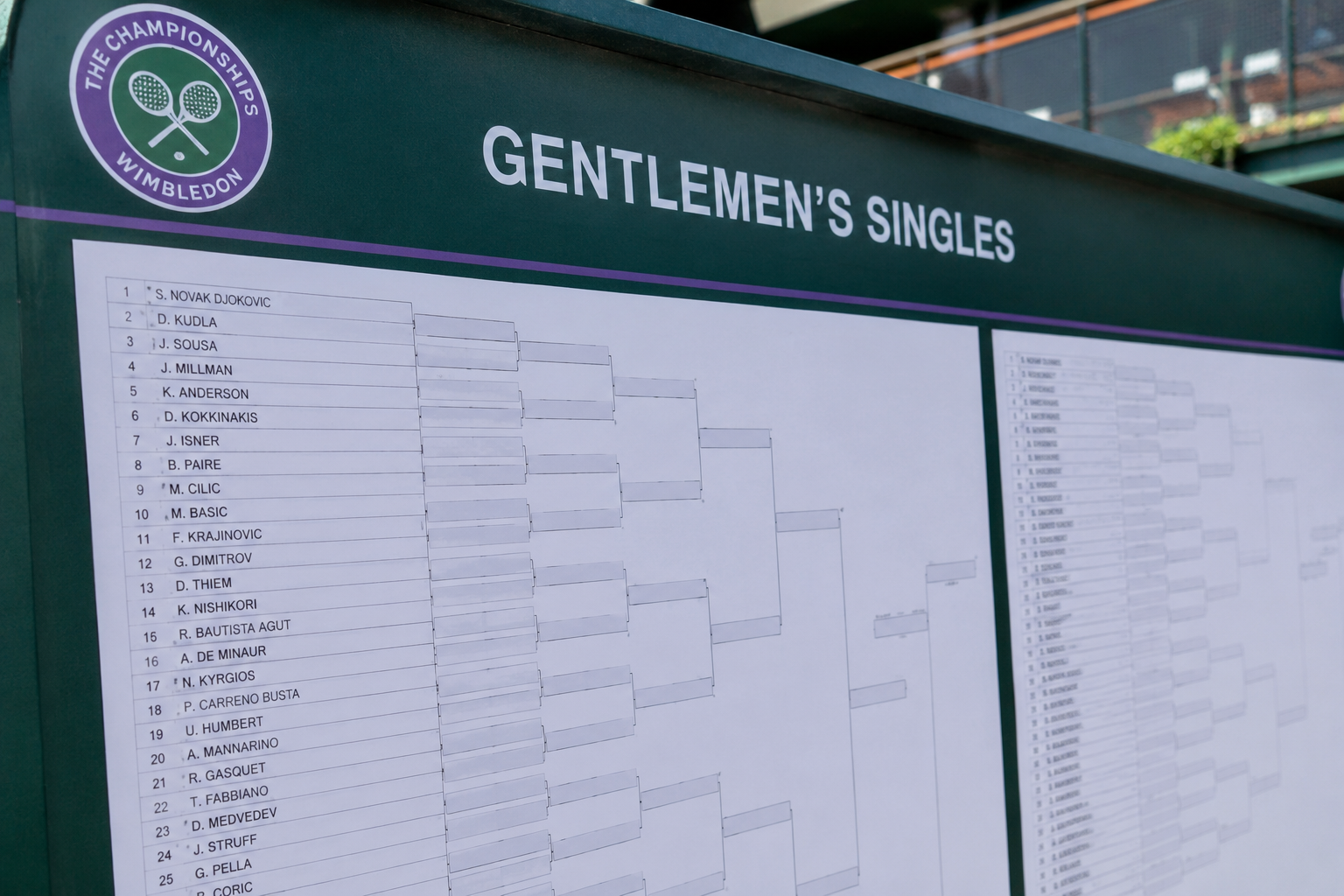
A tennis draw is the tournament bracket that decides the matchups and possible progress of players through an event. Once the draw has been made, players can see who they will face in the opening round. They can also see who they will meet in the final round if they make it through.
So, in a 128-player singles tournament, such as that of a Grand Slam, the structure follows 64 matches in the first round. The second round has 64 players and 32 matches. The knockout rounds follow this structure until the final, where there is one match with two players.
Every player falls somewhere within the brackets. So, the draw provides the roadmap for where they are positioned in the competition.
How Does a Tennis Draw Work?
In a tennis tournament draw, the field is divided into sections. The players are then placed into specific positions within the bracket. In a standard knockout tournament, losing a match means that the player is eliminated. The winner of that round moves to the next round.
The number of rounds depends on the size and format of the tournament. Grand Slams consist of four rounds, quarter-finals, semi-finals, and then the final. This means that a player needs to win seven matches to win the tournament.
But remember, a player can only play with players from their section of the draw until the later stages of the tournament.
How Are Tennis Draws Made?
A draw is used to determine where players are placed. The exact process of creating a draw is dependent on the tournament type. But, generally, player rankings, seeding, qualifiers, wildcards, direct entries, protected rankings, and the size and format of the tournament are taken into consideration.
The goal is to create a fair and organised tournament while ensuring that players with higher seeds are separated in the early rounds. This is where tennis seeding becomes important.
What is Seeding in a Tennis Draw?
Seeding is used to separate the highest-ranked players in the draw. This is done so that they only face each other in the later, more competitive rounds. The No. 1 and No. 2 seeds are separated, while the other high seeds are distributed throughout the brackets.
So, in a typical 128-player singles draw, the No. 1 and No. 2 seeds are placed on opposite sides of the draw. Lower seeds are placed in the remaining seeding positions. This means that they will only meet in the final.
But this doesn’t guarantee that the top seeds will face each other in the later matches. A seeded player can lose in the first round. This is all part of the excitement that is a tennis match.

What Are the Different Sections of a Tennis Draw?
Your typical draw is divided into two halves – the top half and the bottom half. These halves are then divided into quarters, and those quarters are divided into smaller sections. As such, a player’s route through a tournament narrows as the round progresses.
This also means that players placed in different sections can’t meet until the tournament reaches the stage where the top half and bottom half merge.
What is a Random, Tough, and Good Draw in Tennis?
A random draw determines where lower-seeded players are placed. Once seeded players are placed, other players get the remaining spots. This means an unseeded player could face a highly ranked opponent in the opening round.
This is considered a tough draw as the unseeded player has been given the toughest possible opening-round opponent. A good draw, on the other hand, means that the player’s potential route through the tournament is more favourable. That could mean that they are only facing high-ranked opponents in later rounds or that they are facing players with favourable playing styles.
But tennis is unpredictable. No draw structure guarantees success or failure. The draw only determines who will meet when.
What Happens to Qualifiers in the Tennis Draw?
Many tournaments have what is called a qualifying draw before the main tournament. Here, players who didn’t automatically qualify for the main draw are given an opportunity to qualify. This draw generally has its own bracket with its own progression stages.
So, once the main draw is made, the players who are newly qualified are placed within the remaining spots. This means that some of the first-round opponents are only known right before the tournament starts.
Many of these players are considered wildcards, as they didn’t automatically qualify. A wildcard is someone who is promising, returning, local, a former player, or a player who doesn’t have enough ranking points for direct entry. They keep draws exciting, as you never know what they will bring to the table.
What is a Bye in a Tennis Draw?
A bye means that a player advances to the next round without having to play a match. Byes are more common in smaller ATP and WTA tournaments. This happens when the number of entries doesn’t neatly fit into the required brackets. Top seeds often receive a bye when it’s required.
But a bye is not an automatic win. It just means that the player doesn’t have to face an opponent in that particular round.
Bet on Tennis with bet.co.za
Now that you understand what a tennis draw is and why it’s used, we hope the actual draw process is a bit easier to understand. A draw is all about separating seeded players so they don’t play each other too early. The draw is structured as a knockout-type tournament where the players progress until the final is reached. This includes qualifiers and wildcards.
Understanding a player’s route to success is helpful when placing a bet. It helps you consider things such as potential opponents, head-to-head records, and previous performances. Ready to put your knowledge to the test? Bet on tennis now with bet.co.za.






F1 News & Updates
Bahrain Grand Prix in Malaysia Betting Tips & Predictions


F1 News & Updates
Belgian Grand Prix Review

F1 News & Updates
F1: Hungarian Grand Prix Preview And Predictions


F1 News & Updates
Austrian Grand Prix Review – Verstappen and Perez Shine in Spielberg

International And Local Golf News And Tournaments
Podcast: US Open Golf Betting Preview