
Just like cricket, tennis is an outdoor sport where the weather can change the match in an instant. Sunshine, wind, rain, humidity, and even a small drop in temperature can influence how the ball moves, how players perform, and how long a match lasts.
That is why professional tennis players always pay close attention to the forecast before stepping onto the court. If you enjoy watching or betting on tennis, understanding how weather affects outdoor tennis matches can help you better understand player performances and match results.
Take a closer look at the tennis weather conditions that can influence the game.

Why weather matters in tennis
Unlike indoor events, outdoor tennis matches are played in changing conditions that players cannot control. Some athletes perform better in hot weather, while others are more comfortable in cooler temperatures or windy conditions.
Weather can affect:
- Ball speed
- Ball bounce
- Player movement
- Stamina and fitness
- Court conditions
- Match delays and suspensions
Even the smallest changes can have a big impact during a close match.
How Hot Weather Changes Tennis Matches
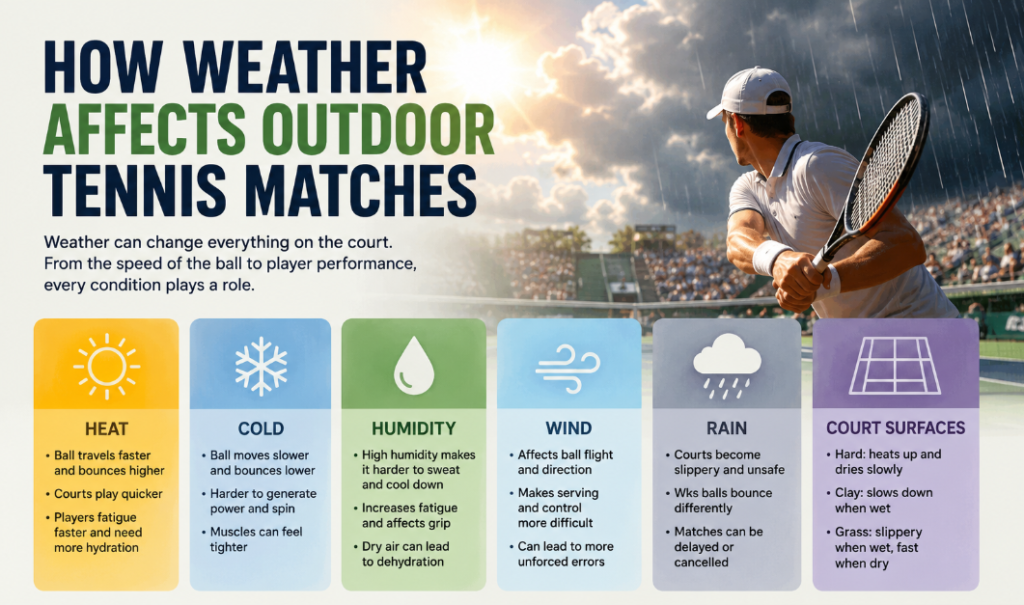
Warm temperatures usually make tennis faster. As the temperature rises, the air becomes less dense. This allows the tennis ball to travel through the air more easily, creating quicker shots and higher bounces.
Big servers and aggressive players often enjoy these conditions because they can hit powerful winners that are harder to return. The court itself can also become faster as it heats up, especially on hard courts. Hot weather also brings physical challenges. Long rallies become more demanding, and players lose more fluids through sweat.
Without proper hydration, energy levels can drop quickly during long matches. Many tournaments held during the North American summer swing are known for testing players with extreme heat.
What Happens When It’s Cold?
Cooler temperatures usually slow the game down. Cold air is denser than warm air, making it harder for the ball to travel at high speed. Shots lose some of their pace, and the ball often stays lower after the bounce.
Players may need to work harder to create power and spin. Baseline rallies can become longer because it is more difficult to hit outright winners.
Cold weather can also make muscles feel tighter, increasing the importance of a proper warm-up before the match begins.
The Role of Humidity
Humidity affects both the player and the tennis ball.
H3: High Humidity
When humidity levels are high, sweat does not evaporate as quickly. Players can overheat faster, feel more tired, and lose energy during long rallies.
Grip can also become an issue because sweaty hands make it harder to hold the racket securely. Many professionals use towels between points and change grips regularly during humid matches.
Humid air is also slightly less dense, which can have a small effect on how the ball travels through the air.
Low Humidity
Dry conditions allow sweat to evaporate more easily, helping players stay cooler. However, very dry weather increases the risk of dehydration if players do not drink enough water throughout the match. Staying hydrated remains important, even when temperatures feel comfortable.
Wind Can Change Everything
Wind is one of the toughest conditions for tennis players to handle. Strong gusts can push the ball off its intended path, making simple shots much harder to control. Timing becomes more difficult, and players often make more unforced errors.
Serving also becomes less predictable. Players may struggle to toss the ball consistently, especially during strong crosswinds.
Experienced players often respond by:
- Hitting with more margin over the net.
- Using extra topspin for control.
- Staying patient during rallies.
- Adjusting their footwork more carefully.
Winning in windy conditions often comes down to consistency instead of power.

Rain and Match Delays
Rain has one of the biggest impacts on outdoor tennis because safety becomes the main concern. Even a small amount of rain can make court surfaces slippery. Wet tennis balls also become heavier, changing their bounce and reducing spin.
Officials usually stop the match quickly if the court becomes unsafe. Heavy rainfall makes outdoor courts impossible to use until they dry completely.
Some major tournaments have retractable roofs like the Centre Court at Wimbledon, allowing matches to continue indoors. Others must wait until the weather improves before play can resume, sometimes causing lengthy delays or scheduling changes.
How Weather Affects Different Tennis Courts
Not every court reacts to weather in the same way.
Hard Courts
Hard courts often become quicker in hot weather as the surface warms up. Rain creates another challenge because these courts can take time to dry completely. Damp patches may lead to uneven bounces, forcing players to adjust their shot selection.
Clay Courts
Clay courts change noticeably depending on moisture levels. Dry clay creates a faster surface with higher bounces. Wet clay slows the ball down and gives players more grip under their feet.
Rain delays are especially common during clay court tournaments because the surface needs careful maintenance before matches can restart.
Grass Courts
Grass is naturally the fastest tennis surface. Dry grass produces low, skidding bounces that reward attacking players. When grass becomes wet, it turns extremely slippery, increasing the risk of players losing their footing. As tournaments progress, worn areas on the grass can also create uneven bounces that influence rallies.

How players prepare for different weather conditions
Professional players spend plenty of time preparing for changing weather. Checking forecasts before a match helps players decide what clothing, shoes, and equipment they will need. Some athletes wear extra layers while warming up if temperatures are low, while others choose lighter clothing for hot conditions.
Hydration is another key part of preparation. Drinking water consistently before and during the match helps players stay focused, especially during hot and humid conditions. Electrolyte drinks can also replace minerals lost through heavy sweating.
Mental preparation is equally important. Outdoor conditions can change quickly, and players who stay calm usually adapt better than those who become frustrated by wind or rain delays. Some players also make small equipment changes. In windy conditions, a slightly heavier racket may offer more stability, while grip products can improve racket control during humid weather.
Why weather knowledge matters for tennis fans
Understanding the weather gives you a better idea of why matches sometimes unfold in unexpected ways. A powerful server may struggle in heavy wind, while a patient baseline player could benefit from cooler temperatures that slow the game down.
Weather can also influence betting decisions. Looking at the forecast alongside player form, court surface, and recent results provides a more complete picture before placing a tennis bet.
Bet on tennis
Outdoor tennis is never played under exactly the same conditions. Heat, cold, humidity, wind, and rain all influence the speed of the ball, the bounce of the court, and the physical demands placed on every player.
The best players are not only skilled with a racket but are also quick to adapt when conditions change. Learning how weather affects outdoor tennis matches helps fans appreciate the sport even more and can give bettors extra insight before the first serve.
Ready to put your tennis knowledge to the test? Sign up with Bet.co.za today, explore the latest tennis markets, and back your favourite players throughout the biggest tournaments on the calendar.






Slot games
Slot Games of the Week to Try with Bet.co.za

Carling Currie Cup
Pumas vs Griquas: Preview and Predictions


Slot games
Slot Games of the Week to Try with Bet.co.za
Carling Currie Cup
Pumas vs Griquas: Preview and Predictions

F1 News & Updates
Belgian Grand Prix Review

F1 News & Updates
F1: Hungarian Grand Prix Preview And Predictions


F1 News & Updates
Austrian Grand Prix Review – Verstappen and Perez Shine in Spielberg

International And Local Golf News And Tournaments
Podcast: US Open Golf Betting Preview