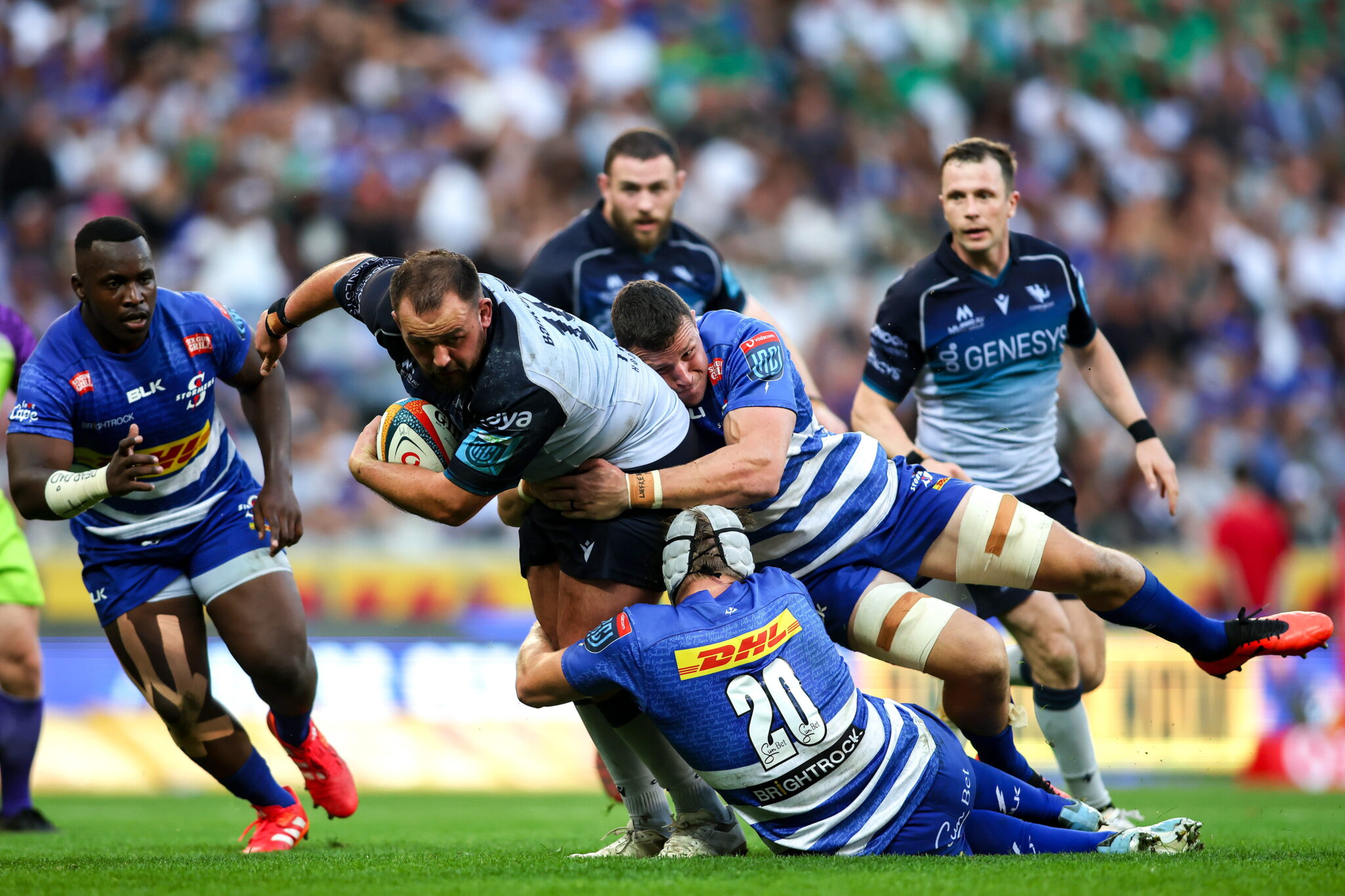
Modern rugby is about a lot more than the score at the end of the match. It’s filled with stats that show how a team played, who was dominant in the contest, and why one team won over the other. These stats are regularly referenced by commentators in contests such as the Currie Cup, the United Rugby Championship, and international Test matches. If you’ve ever wondered what these stats mean, then this is the guide for you.

Why Rugby Stats Matter
Stats help to tell a story that the scoreboards can’t explain. They’re used to explain how and why something happened. This is done by measuring attacking efficiency, defensive performance, discipline, and territory control.
Not only this, but stats are used to identify the strengths and weaknesses for coaches. They help analysts evaluate performances and broadcasters to explain key moments during the match. As such, they help us understand the complete picture of the game.
Possession
Possession measures how long each team has control of the ball during the match. Generally, the more possession a team has, the more opportunities they’ve had to attack.
For example, the Springboks have had 61% possession, and Wales have had 39% possession. This means that the Springboks have had the ball for over half the game while Wales have had the ball for less than half of the match.
But it’s important to note that possession doesn’t equal victory. Some teams opt to play with less possession. Instead, they focus on defence and attack through turnovers and tactical kicking.
Territory
Territory measures where the game is played. If a team spends most of the match inside the opposition’s half, they’re said to have won the territorial battle. This is because they’ve managed to put the opposition under constant pressure. More than this, they’ve had increased chances of scoring and defending closer to their own try line.
Strong territorial control means that opponents have had to defend for longer. This often results in penalties and scoring opportunities.
But teams with an impressive kicking game can dominate territory even if they have less possession.
Metres Carried
‘Metres carried’ refers to the total distance a player gains while running with the ball. Outside backs generally have the highest number of meters carried. This is because your wings are your fastest players. Forwards, on the other hand, make shorter but highly effective carries to help the teams build momentum.
For example, if a winger catches a kick and runs 40 metres before being tackled, those 40 metres are added to their total metres carried.
Gainline Success
A gainline is the imaginary line drawn where each phase begins. A player advances the gainline by carrying the ball beyond that line before being tackled. Crossing the gainline creates better attacking momentum, places increased pressure on the opposition, and creates a faster ball for the scrum-half.
So, constantly winning the gainline means that your team has had a successful attack.
Carries
A carry is every time the player runs with the ball. Forwards carry into heavy traffic to create a quick ball. Backs look to exploit space and gain a larger chunk of territory.
Defenders Beaten
‘Defenders beaten’ counts how many defenders a player gets past. A defender can be beaten through speed, footwork, and strength. Players who regularly beat defenders create uncertainty in defensive lines. They also create scoring opportunities for teammates.
Clean Breaks
A clean break is made when a player breaks through the defensive line and enters open space. Clean breaks generally lead to tries or significant territorial gains.
Offloads
An offload is a pass made after contact but before a tackle. Successful offloads keep attacks moving and prevent resets.
Teams like France and New Zealand are known for their expansive style of rugby and impressive offloads. They are able to create space out wide and move defenders around the field.
Tackles Made
‘Tackles made’ refers to every successful tackle made by the player. Loose forwards are known to make 15-25 tackles a match. Next to them, locks and hookers are known for their high tackle rates because of their defensive workloads.
Tackle Success Percentage
Tackle success measures how efficiently a team or player completes tackles. Poor tackle success often results in line breaks and scoring opportunities for the opposition.
For example, if a player attempted 22 tackles and successfully made 20 tackles, their tackle success rate is 91%.

Missed Tackles
A missed tackle is a tackle that failed to bring the player to the ground. If a team is missing too many tackles, they’ll generally struggle to contain powerful attacking sides.
Turnovers Won/Conceded
A turnover happens when the possession of the ball changes to the other team. This is done through interceptions, winning opposition lineouts, forcing scrum penalties, jackaling at the breakdown, and stripping the ball in contact.
Winning a turnover can change the momentum of the game instantly. It can also create counter-attacking opportunities.
But turnovers conceded happen when a team loses possession of the ball. This is due to knock-ons, forward passes, poor handling, and excellent defensive pressure.
Rucks Won
Generally speaking, every tackle leads to a ruck. Rucks won measures how often a team successfully retains possession after contact. Often losing multiple rucks means no sustained attacking pressure.
Kicking Metres
Metres kicked measures the total distance a team kicks the ball during a match. This includes tactical kicks. An effective kicking game allows teams to gain territory, relieve pressure, and force opponents to attack from deep inside their own half.
Goal Kicking Percentage
‘Goal-kicking percentage’ measures how accurately a player converts penalty goals and try conversions.
For example, if Handre Pollard has made 6 out of 7 of his kicks, his goal-kicking percentage is 86%.
Scrum Success
The scrum is one of rugby union’s defining contests of power. Scrum success measures how often a team wins possession from its own scrum. Top-performing teams are expected to retain almost every attacking scrum.
Lineout Success
Lineout success measures how many lineouts a team wins. Strong lineouts provide a platform for attacking moves. They also help teams move effectively through their territory.
Penalties Conceded
The number of penalties conceded reflects the level of discipline of a team. A well-disciplined team will usually concede fewer than ten penalties in a match. This is because penalties allow the opposition to gain territory, launch an attacking lineout, build momentum, and kick for goals.
Tries and Try Assists
A try is the most important attacking stat. This is because it’s the highest number a player can put on the scoreboard.
Teams that consistently create line breaks, dominate territory, and maintain possession score more tries. But try assists are also important to look at. A try assist is the player who delivered the final pass before a try is scored.
Minutes Played
This is a key stat to look at when trying to understand the other stats. Understanding a player’s minutes played provides context when comparing performance.
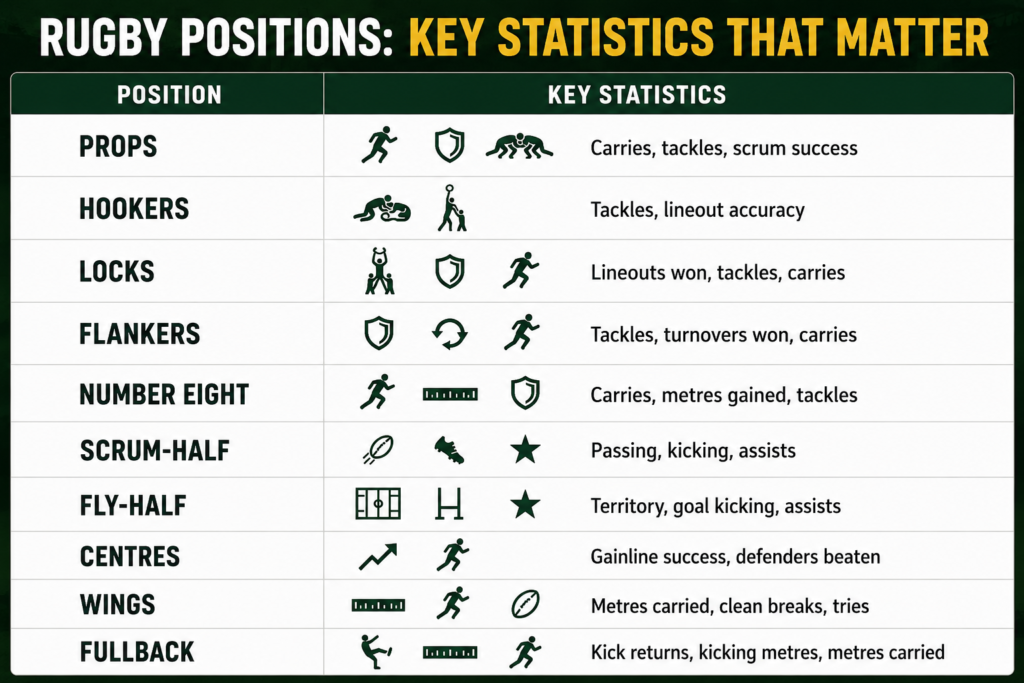
Which Rugby Statistics Matter Most?
Different rugby positions use different stats to measure their performance.
Bet on Rugby with bet.co.za
Rugby stats provide valuable insights into the game beyond the final result. Rather than looking at wins and losses, analysing performance data can reveal whether a team is improving or not. Understanding rugby statistics can help you make more informed betting decisions. So, take your newfound knowledge and give it a try. Bet on rugby now with bet.co.za.






Slot games
Slot Games of the Week to Try with Bet.co.za

Carling Currie Cup
Pumas vs Griquas: Preview and Predictions


Slot games
Slot Games of the Week to Try with Bet.co.za

F1 News & Updates
Belgian Grand Prix Review

F1 News & Updates
F1: Hungarian Grand Prix Preview And Predictions


F1 News & Updates
Austrian Grand Prix Review – Verstappen and Perez Shine in Spielberg

International And Local Golf News And Tournaments
Podcast: US Open Golf Betting Preview